Section 24 — Clean Architecture
Overview of Clean Architecture
Instead of “business logic” depend on “data access logic”, this dependency is inverted; that means, the “data access logic” depend on “business logic”.
Benefit: The business logic is highly clean-separated, independent of data storage and UI, unit-testable.
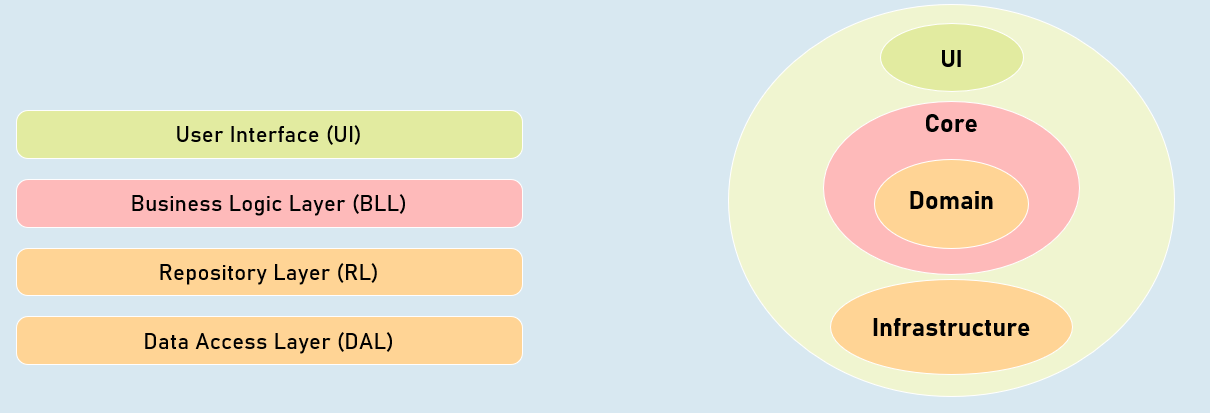
Traditional Three-Tier / N-Tier Architecture
1. User Interface (UI)
2. Business Logic Layer (BLL)
3. Repository Layer (RL)
4. Data Access Layer (DAL)
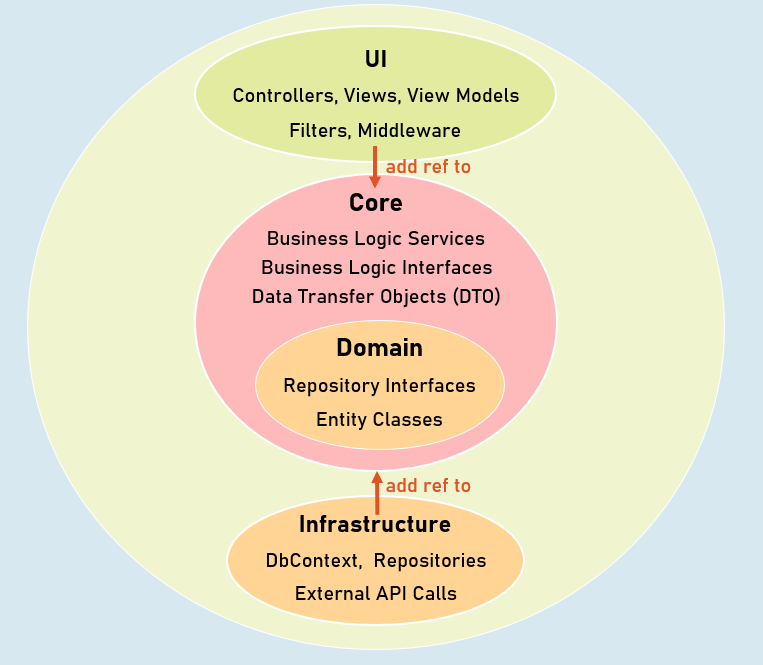
Clean Architecture
UI
- Controllers, Views, View Models
- Filters, Middleware
Core
- Business Logic Services
- Business Logic Interfaces
3. Data Transfer Objects (DTO)Domain
- Repository Interfaces
- Entity Classes
Infrastructure
- DbContext, Repositories
- External API Calls
Clean Architecture
Changing external system
Allows you to change external systems (external APIs / third party services) easily, without affecting the application core.
Scalable
You can easily scale-up or scale-out, without really affecting overall architecture of the application.
Database independent
The application core doesn’t depend on specific databases; so you can change it any time, without affecting the application core.
Testable
The application core doesn’t depend on any other external APIs or repositories; so that you can write unit tests against business logic services easily by mocking essential repositories.
Clean architecture is earlier named as “Hexagonal architecture”, “Onion architecture”, “Domain-Driven Design”, “Vertical Slice Architecture”. Over time, it is popular as “clean architecture”.
Clean Architecture